Home / Services
Our Services
Kastech Next works as an IT services company for organizations that need more than code delivered on time. The focus here is on enterprise software and cloud services that solve an actual business problem, whether that means building something from scratch, modernizing an existing system, or automating a workflow that's been manual for too long.
Five service areas make up the core of what this IT services company does. Each one is available on its own, so a client can bring in the team for a single, focused engagement or work across multiple areas as a longer-term technology partner.

Who This IT Services Company Works Best With
Enterprises replacing outdated systems.
Legacy software that's slowing teams down, built years ago on technology that no longer scales well.
Organizations scaling faster than their infrastructure.
Cloud environments that were fine at a smaller size but now need proper modernization.
Teams drowning in manual, repetitive work.
Processes that involve copying data between systems, formatting documents by hand, or chasing approvals over email.
Businesses in regulated or specialized industries.
Healthcare, legal, telecom, and professional associations, where generic software often falls short of actual workflow needs.
If any of that sounds familiar, it's usually a sign that a conversation with an enterprise software and cloud services team is worth having, even before a specific project has been fully scoped out. Most first conversations start exactly this way, someone describing a problem without knowing yet which of the five services applies, and that's completely fine.
A Closer Look at Each Service

Custom Software Development Services
Custom software development services at Kastech Next cover end-to-end product engineering using .NET, Java, Node.js, and Angular. The goal isn't just to write code that works today, but to build on scalable, cloud-native architectures that can hold up as a business grows.
This service tends to suit organizations that have outgrown off-the-shelf software, or that need something built around a workflow too specific for a generic tool to handle well. The company's own product line runs on the same stack: iConceive, Velawx, and DocuNextAi are all custom-built on .NET, Node.js, and Angular, which is part of why client projects in this stack move quickly.

Cloud & Data Services
Cloud modernization is a big part of this offering, covering AWS, Azure, and GCP depending on what a client's existing infrastructure looks like. Alongside that sits data analytics and business intelligence work, built using Power BI and AI Copilot to turn scattered data into something a team can actually act on.
This is where cloud and AI automation services intersect most directly with everyday decision-making. A dashboard that updates in real time is only useful if the underlying cloud infrastructure can support it reliably, so the two pieces tend to get handled together rather than as separate projects. A coverage-request platform built for telecom services is a working example of this: a .NET and SQL Server system, built for a telecommunications carrier, that has stayed in continuous service since 2016, revised across multiple releases as the carrier's needs changed.
Microsoft 365 & Power Platform Solutions
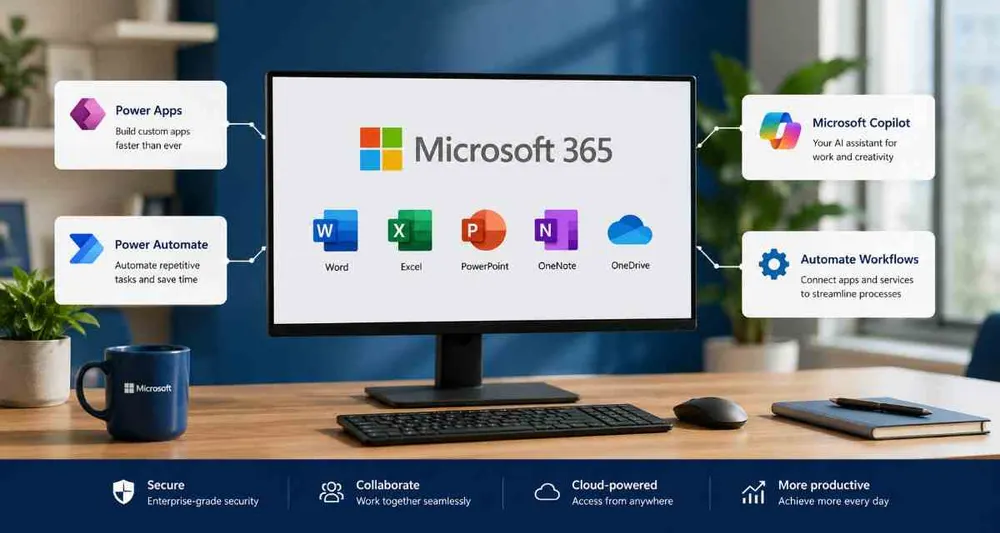
For organizations already working inside the Microsoft ecosystem, Kastech Next operates as a Microsoft 365 solutions provider building Power Apps, Power Automate workflows, and Copilot integrations, mostly aimed at removing repetitive manual steps from processes that already exist.
Low-code applications built through Power Platform tend to move faster than a fully custom build, which makes this a practical starting point for teams that need results without a long development cycle. One live example: staff request leave in plain language through Outlook, the request routes to a manager's inbox, and the approval or decline is handled from the mail itself, using Microsoft Copilot Studio, Power Automate, and Outlook, with no separate portal or app to sign into.
Web & Mobile Development
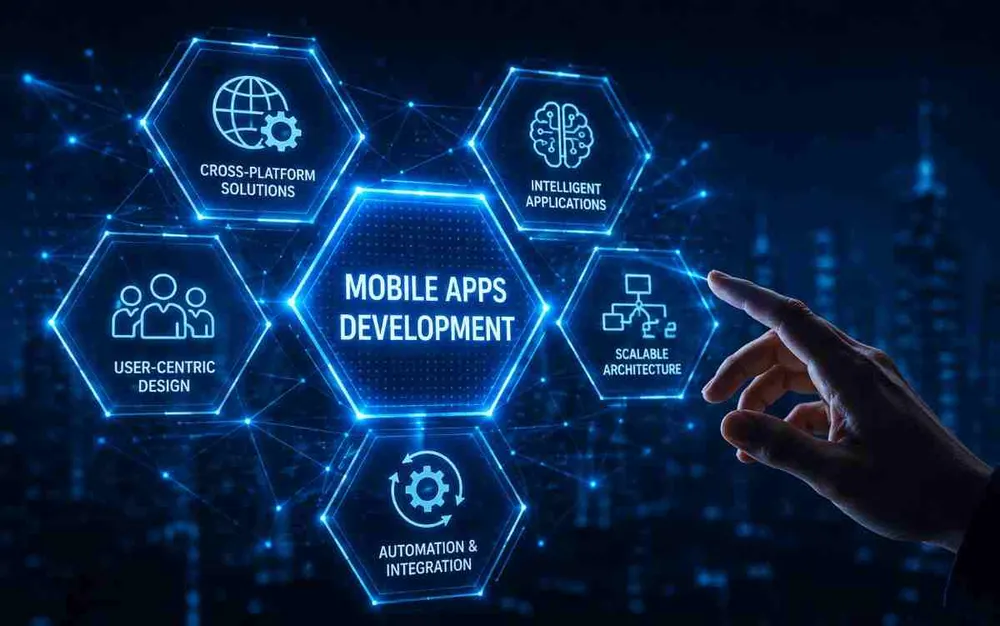
This service covers responsive web builds using Angular and WordPress, along with cross-platform mobile apps developed through .NET MAUI and native APIs. Whether the need is a public-facing website or an internal mobile tool for field teams, the same engineering standards apply across both, as seen in iConceive's cloud web portal paired with its iOS and Android patient app.
AI & Automation
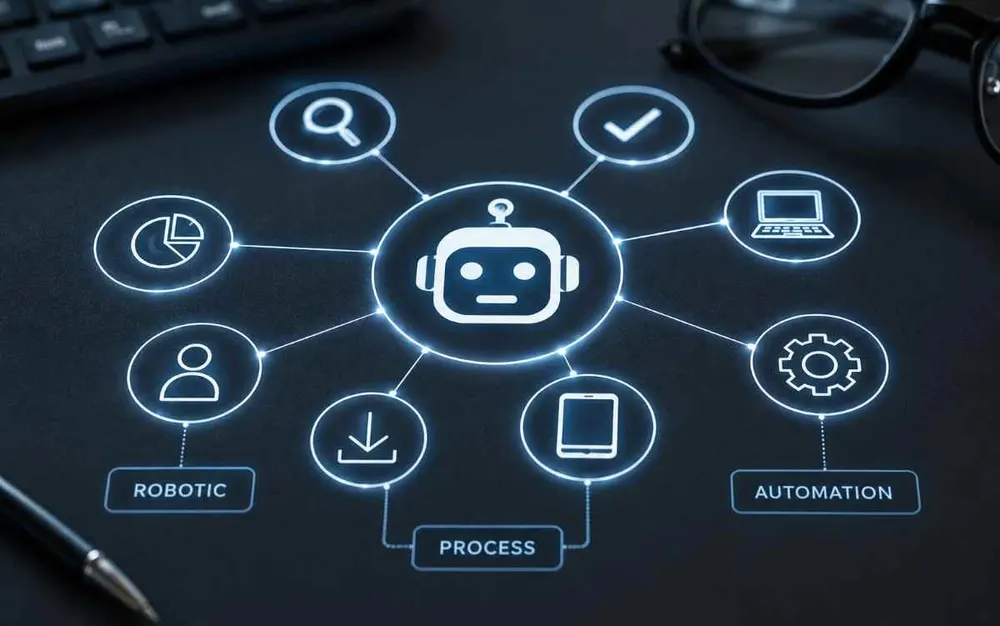
Document and email automation sit at the center of this service, alongside ChatGPT and generative AI integration built for real business workflows, since the AI isn't a separate add-on, it's built directly into how a process runs day to day.
In production today, this looks like three concrete capabilities: systems that read source documents and extract the facts, figures, and dates that matter (as in Velawx and DocuNextAi); systems that draft structured output from those source files, whether that's a legal petition or a formatted report; and systems that answer plain-language questions against a client's own documents or policies, from inside the tool a person is already working in products like DocuNextAi grew directly out of this thinking, taking something that used to require hours of manual work and turning it into something that finishes in minutes. The decision itself always stays with the person; these systems prepare the work so a lawyer, analyst, or manager can review and sign off on it, with everything produced traceable back to its source.
What Sets These Enterprise Software and Cloud Services Apart
A lot of vendors offer some version of the five services listed above. What tends to differ is how connected they are to each other. At Kastech Next, cloud infrastructure decisions, automation opportunities, and custom development work aren't handled by separate teams that hand a project off between them. The same group that scopes a cloud migration is often the same group thinking about where AI or Power Automate could remove manual steps from what gets built on top of it.
This matters more than it might sound. A cloud environment built without automation in mind usually ends up needing rework later once a client realizes how much manual effort is still happening inside it. Building enterprise software and cloud services together from the start avoids a lot of that rework.

Development
Infrastructure
Automation
Workflows
Platform
Connected technology decisions from infrastructure to automation.
Why Choose Kastech Next for Enterprise Software and Cloud Services
A few things tend to come up when clients explain why they picked Kastech Next over another vendor:
Full-Stack Technology Capability
The team operates as a software development and cloud consulting company rather than specializing narrowly in just one layer of the stack, which means fewer handoffs between vendors on a single project.
Business Problem First
Projects are scoped around the actual business problem first, with the technology stack chosen afterward rather than the other way around.
Product-Building Technical Depth
The same people who build the company's own products (iConceive, Velawx, DocuNextAi) also work on client projects, so the technical depth carries across both.
Cloud + AI Automation Together
There's a genuine focus on cloud and AI automation services as a combined offering, not two separate teams that don't talk to each other.
For enterprises comparing options, this combination is part of what makes Kastech Next function as a full-stack IT services company that clients in India and abroad can work with across the entire technology stack, from infrastructure up through the application layer. It's also a reasonable way to evaluate any IT services company under consideration: ask how connected their cloud, automation, and development work actually is, rather than taking separate service pages at face value.
End-to-End IT Solutions for Enterprises
Most engagements don't stay confined to a single service for long. A cloud migration often surfaces automation opportunities. A custom software build usually touches on integrations with Microsoft 365 tools already in use. Because of that overlap, Kastech Next is built to deliver end-to-end IT solutions for enterprises rather than isolated, disconnected pieces of work.
Cloud Infrastructure
Custom Software
Microsoft Integration
Automation
AI Layer
Connected Business System
This matters most for organizations that don't want to manage three or four different vendors just to get one connected system working properly. A single team that understands the full picture, from cloud infrastructure to the AI layer sitting on top of it, tends to move faster and catch fewer things falling through the cracks.
Industries Behind These Services




While the services themselves apply broadly, most of the deeper expertise has been built through work in a focused set of industries: healthcare, legal, telecom, and professional associations. Custom software development services built for a legal drafting tool look different from ones built for a fertility clinic portal, and that industry-specific experience shows up in how new projects get approached, even outside those exact sectors. Each of these sectors also comes with its own rules about who may see what: patient records, legal files, and personal details are handled with encryption, role-based access, and access scoped so people only see their own area, a discipline proven out in iConceive, Velawx, and other systems built with the same restricted-access approach.
How a Typical Engagement Works
Every project looks a little different, but most run through the same four stages, each with a clear deliverable at the end of it:
Discovery
The team sits with the people who do the work
and follows the process as it runs today, including the parts that happen outside any formal
system.
Deliverable: written scope, price & delivery date.
Build
You see the software as it's actually built,
rather than reading status reports, and can redirect it while that's still cheap to do.
Deliverable: working software at every review.
User Testing
A small group runs the real process on the
system, on real data, before anyone else is asked to switch over.
Deliverable: version corrected through real use.
Launch & Support
The system is deployed into the client's own
environment, the people who'll run it are trained, and the team stays on for the changes that
follow.
Deliverable: deployment + training + support
arrangement.
This structured approach to delivering digital transformation and automation services is part of why enterprises tend to extend a first project into a longer relationship.